
Art classes since 1995
Since 1995 Accademia del Giglio has been teaching to italian and international students a varied range of art techniques, such as drawing (with pencil, charcoal, pastel, crayon, pen-and-ink, sanguine), painting (acrylics, oil, egg tempera), watercolour and fresco.
The school has always placed considerable emphasis on the quality of its teaching and its programmes. All our teachers have a degree from an approved Italian Academy and have at least 4 years of teaching experience.
Our mission: the Italian approach
At Accademia del Giglio, all our teachers are trained to seamlessly weave the traditions of the great Italian masters with the many artistic innovations that have shaped the world of Fine Arts from Impressionism to the present day.
While AdG is an art academy, our instructors go beyond traditional academicism. Their mission is not only to impart foundational principles but also to cultivate each student’s creativity and talent. Through personalized guidance, they help students navigate their artistic journey, offering step-by-step support to achieve their goals and aspirations.
This philosophy—rooted in both the study of classical masterpieces and an openness to new artistic challenges—echoes the very ideals embraced by the great Italian masters of the Renaissance.
Class sizes are intentionally kept small, typically 8-10 students, fostering a dynamic, collaborative atmosphere reminiscent of a Renaissance bottega, where ideas flow freely, and skills are refined through shared experience.
As Leonardo da Vinci wisely said, “Learning never exhausts the mind,” to which Michelangelo seemed to reply, “I am still learning.”
Drawing and Painting
While studying at our academy you will learn the Art techniques that you like or that you wish to improve.
Since our classes are normally made up of 8-10 students you will be able to attend a course tailored to your needs. Individualized instruction ensures that every student receives personalized attention.
Our Art instructors will tutor you and will arrange an Art program according to your artistic skills, interests and experience.
You will choose the media you would like to focus on as well as the subjects you are eager to deal with.
So for instance, if you decide to study drawing techniques you can opt for one or more subjects such as portrait, figure drawing, still life, cityscape, perspective.
If on the contrary you want to acquire or develop good painting skills you may also be keen to concentrate on sundry subjects following your inclination and your preferences.
For Art novices and experienced artists
All our classes are made up of 8-10 students so as to facilitate the learning process and ensure that focus is placed on the learning requirements of the individual student, and on helping him/her to overcome any difficulties in a friendly environment, whilst the range of courses on offer allows the students to adapt the programme to their individual needs.
That is why our classes are open both to Art novices and to experienced artists and professionals who wish to nurture their creativity and who want to improve one or more techniques.
In studio and open air
Art classes are held both in English and in Italian in our fully equipped studio, which is located in the heart of Florence, a few steps from the Duomo and the Uffizi Gallery.
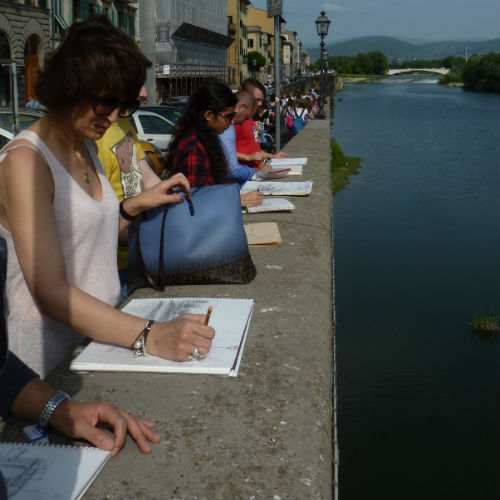
Some lessons may also take place outdoors, in the squares and streets of the city. Most of the courses run on weekdays in the afternoon, but intensive workshops and seminars may be also held in the morning or over the week-ends.
Credits and certificates
At the end of the course each student will be issued a certificate of attendance stating the programme and the number of hours he/she has attended as well as an evaluation of the goal achievement.
The Accademia del Giglio recommends that students who would like to receive credit for their studies abroad check with their university or college prior to registration.
As most universities and colleges consider 15 hours of study per term to be an acceptable level, we offer classes which provide the equivalent of 5 hours of credit per term for the study of the Italian language, along with optional hours for those students who wish to study other modules such as the history of art, studio art, etc. Please click here for more detailed information.
Our teachers
All our teachers are highly qualified and experienced in the various art subjects and techniques. They have a degree from an approved Italian university or academy, they are Italian speakers who can also speak English, and have at least 4 years of teaching experience.
Moreover, all our art instructors are prepared to tutor the students and guide them through the comprehensive visual art programmes, without disregarding the needs, the artistic skills and the the creativity of each single student.
Art exhibitions
An art exhibition will be organized in the school premises for all the students who have attended the entire one or two-year art course.
Pre-established groups
Please let us know your requests regarding dates, schedules and duration for the course your group wishes to attend and we will reply you with all the details regarding special prices, schedules and extra-curricular activities.
Courses outline
A bespoke syllabus that may meet with your needs and skills will be settled on your first day of class after a brief interview with our Art instructors. On this occasion you may also produce a small portfolio of your own or even just a few pictures of the artworks that you have recently accomplished and that you deem significant for your Art studies. Therefore, our art instructors will be able to outline a tailor-made art program that keeps well in mind your needs and goals as well as your main interests in the arts.
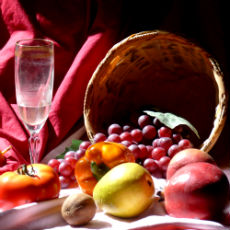
Drawing and Painting techniques
Basic and advanced drawing and painting classes. 9 different units to explore all the techniques such as charcoal, tempera, oil, watercolor and much more.
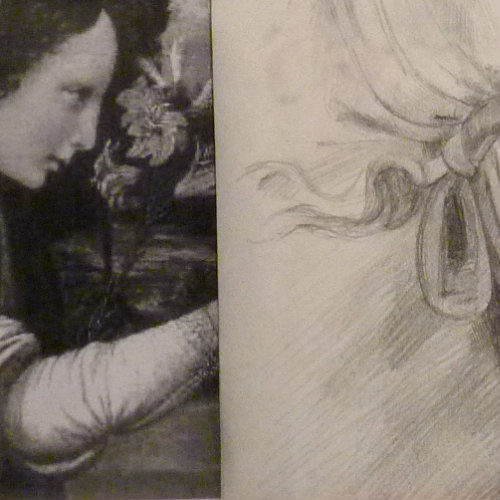
Advanced techniques
For students who are determined to undertake greater artistic challenges through the practice of sustained art-making
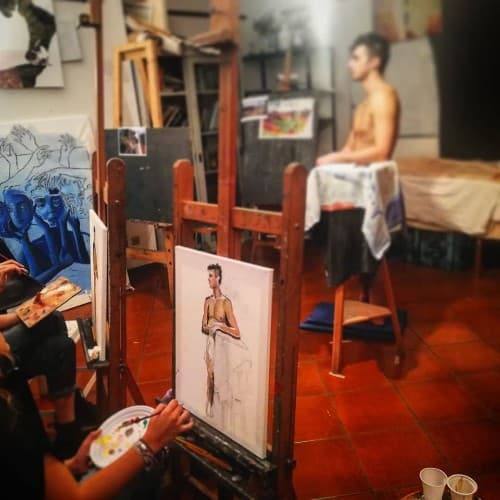
Life Drawing courses
This course deals with visual understanding by direct observation of the human body and it includes the acquisition of basic notions of anatomy as well as the methodology used to draw bodies and faces.
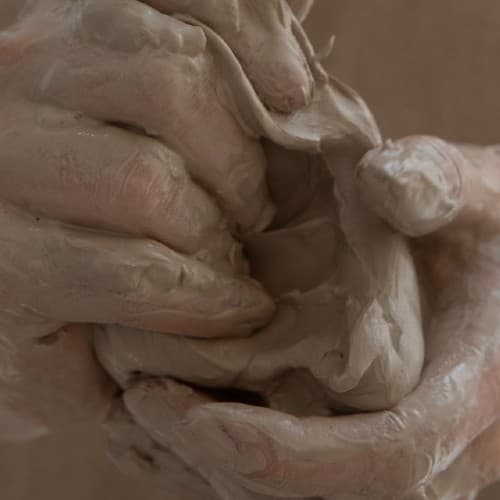
Sculpture Course
The complete realist sculpture course with clay is made up of 3 units: bas relief and sculpture in the round, study of the human figure and human head.
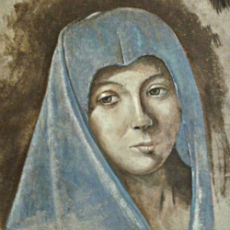
Fresco Course
Study one of the oldest painting techniques that in the 14th century, thanks to the Italian painter Giotto, gained more and more importance among the Fine Arts.
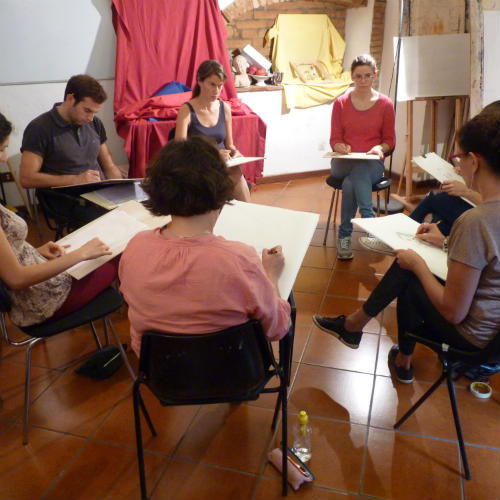
Long term course of Visual Arts
During two academic years, students will approach, learn and practice the different techniques for drawing, painting, art graphics, illustration and comics.
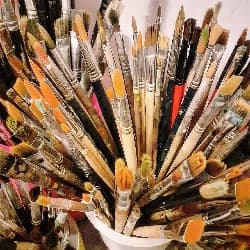
Art Workshops
Intensive weekly seminars in classical drawing and painting techniques, besides a combined Art Workshop on a semi-individual basis available throughout the year.

One Day of Art in Florence
A day in studio or en plein air in Florence dedicated to Fine Arts. Draw and paint immersed in the Renaissance atmosphere and capture sketches of the city’s marvelous views.
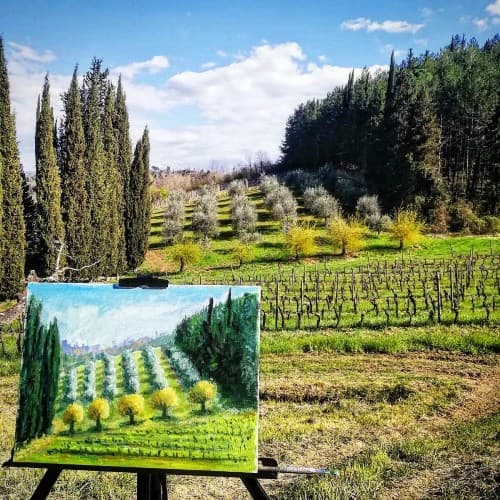
One Day of Art in Tuscany
Experience an intensive day of art in your favorite Tuscan setting, whether it’s the charming Chianti hills, medieval Siena or San Gimignano, or the captivating city of Lucca.
Drawing and Painting in the week-end
Art Crash courses, meant for those who have little time to concentrate on one or more artistic techniques. Courses are held either in our Art studio or in the squares and streets of Florence.
Preparation Fine Arts Academies
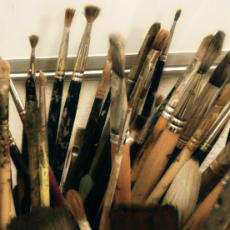
A training course aimed to help students who take the Admission Exam to the Fine Arts Academies statali both in Florence and elsewhere.
Online Art classes
The Art teachers of Accademia del Giglio are available on line for guidance and advice on how to improve your drawing and painting skills